
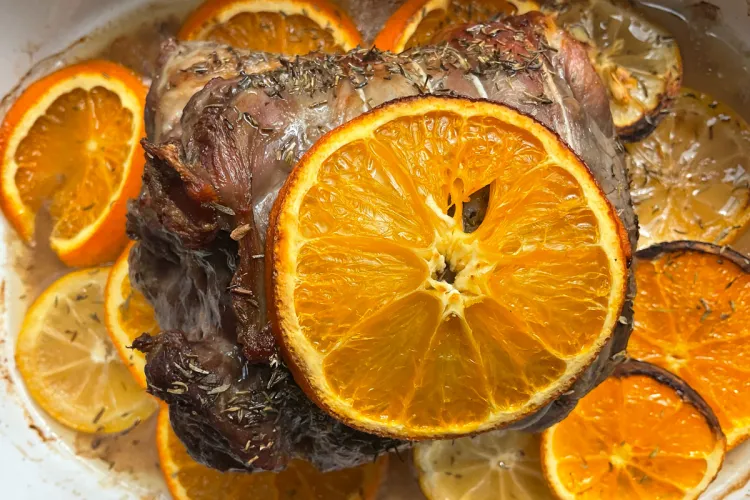
This dish typically features lamb infused with orange and lemon zest, thyme, and sometimes white wine or grape juice, creating a refreshing and aromatic roast. It’s a popular choice for festive occasions like Easter, symbolizing renewal and spring.
Instructions
Heat the oven to 400ºF (375ºF fan)
Pat the lamb dry with paper towels. With a sharp knife, make small incisions all over the meat.
In a bowl, combine the orange and lemon zest and juice, thyme leaves (reserve a few sprigs for roasting), olive oil, salt, pepper.
Rub the mix all over the lamb, getting some into the incisions.
Place the orange and lemon slices in a roasting tin. Put the lamb on top, or put it on a rack. Pour any remaining mix into the tray.
Cook for 20 minutes at 400°C (fan 375ºF) to get a good crust, then lower the temperature to 350°F (325°F fan)
Continue roasting for about 1 hour 15 minutes for medium-rare (internal temperature 140–145°F), or longer for more doneness.
Baste with pan juices every 20–30 minutes.
Remove from oven, cover loosely with foil, and let rest for 15–20 minutes.
Notes
Substitute 4 tablespoons fresh thyme with 4 teaspoons dried thyme.
While the lamb is resting, you can deglaze the roasting tray with a bit more white wine or stock and reduce it for a light pan sauce.
Use the lemon halves after juicing to scrub down your chopping board or sink, the acidity cuts through grease and leaves a fresh scent.
Variations
Instead of slicing, juice the oranges and lemons and add the juice to the mix of zest and thyme to make a marinade. Add a bit of honey or maple syrup (1 tsp) to the marinade for a deeper caramelization.
If using boneless lamb, reduce cooking time by about 15 minutes.
Source
The St. Clement's lamb recipe is inspired by the citrusy flavors associated with St. Clementassociated with St. Clement due to the famous nursery rhyme "Oranges and Lemons," which mentions the bells of St. Clement's church.
Food in Europe