Every spring, millions of people across India gather to throw vibrant powders into the air, dance in the streets, and share festive meals with neighbors. This explosion of color and community marks Holi, one of Hinduism's most joyous celebrations. But beyond the rainbow clouds of pigment lies a festival rich with ritual, meaning, and culinary tradition.
For food lovers curious about global traditions, Holi offers a delicious entry point into Indian culture. The festival's signature dishes—from crispy, sweet gujiyas to cooling glasses of thandai—tell stories of regional heritage, seasonal abundance, and the power of shared meals to bring people together. Whether you're planning to attend a Holi celebration or simply want to explore Indian cuisine from your own kitchen, understanding the festival's food traditions opens a window into centuries of cultural practice.
Holi falls on the full moon day of Phalguna (February–March) and signals the arrival of spring. It's a time when Indians set aside social hierarchies and celebrate with infectious abandon. The festival's foods reflect this spirit of generosity and renewal, offering sweet treats that mark the end of winter and welcome the warmth ahead.
The spirit of Holi
Holi unfolds over two main days, each with its own rituals and atmosphere. The evening before the main celebration, families and communities gather for Holika Dahan, lighting bonfires that commemorate the triumph of devotion over evil. According to Hindu legend, the demon king Hiranyakashipu tried to kill his son Prahlada—a devoted follower of the god Vishnu—by enlisting his sister Holika to carry the boy into a fire. Holika wore a protective cloak, but her plan backfired: the cloak protected Prahlada instead, and Holika perished in the flames. The bonfires of Holika Dahan remember this victory of good over evil and faith over tyranny.
The next morning brings Rangwali Holi, the exuberant color play that has made the festival famous worldwide. Friends, family, and even strangers drench each other in colored water and powders, their laughter echoing through streets transformed into canvases of pink, yellow, green, and blue. Traditional colors came from natural sources—turmeric for yellow, indigo for blue, henna and neem for green, and pomegranate or red sandalwood for red. Today, synthetic powders are more common, though they can contain harsh chemicals that irritate skin and eyes, so many celebrants are returning to natural dyes for safety and environmental reasons.
The festival also carries romantic associations. In many regions, Holi celebrates the playful love between the god Krishna and the milkmaid Radha. Legend tells how Krishna, self-conscious about his blue skin, colored Radha's fair face during a game, creating the tradition of smearing loved ones with vibrant hues. This spirit of playfulness and affection infuses the entire celebration.
Traditional Holi delicacies
Food occupies a central place in Holi celebrations, with families spending days preparing elaborate spreads to share with guests. The festival's signature dishes tend toward the sweet and indulgent, perfect for marking a special occasion and welcoming the spring season.
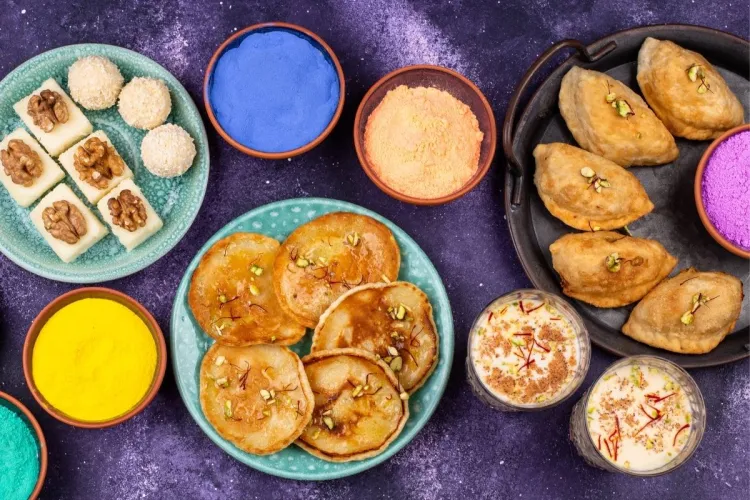
Gujiya stands as perhaps the most iconic Holi sweet. These crescent-shaped pastries, popular across North India—especially in Uttar Pradesh, Rajasthan, Madhya Pradesh, and Bihar—feature a flaky exterior stuffed with a sweet filling of khoya (dried milk), nuts, and desiccated coconut. Fried until golden and sometimes dipped in sugar syrup, gujiyas can stay fresh for about a week, making them ideal for preparing in advance of the festival's busy celebrations.
Thandai provides the perfect cooling counterpoint to Holi's exuberant street celebrations. This traditional drink blends milk with a paste of almonds, peppercorns, poppy seeds, cardamom, fennel seeds, watermelon seeds, saffron, and rose water. The name literally means "cooling" in Hindi, and the combination of nuts and spices is believed to have a cooling effect on the body—especially welcome when spring temperatures in India can soar above 110°F. In some regions, particularly North India, bhang (cannabis leaves and flowers) is added to thandai, though non-intoxicating versions are equally traditional and what children typically drink during the festival.
Malpua has ancient roots, with origins tracing back to Vedic times, making it one of India's oldest sweets. These small, fluffy pancakes are made from flour, milk, and sugar, then fried and soaked in sugar syrup. Different regions prepare malpua in their own styles, but the Holi version typically features cardamom and sometimes saffron for extra festivity.
Puran poli holds special significance in Maharashtra and parts of South India. This sweet flatbread gets stuffed with a filling (puran) made from cooked chana dal (split chickpeas) and jaggery, seasoned with cardamom, nutmeg, and a touch of ghee. The traditional method involves cooking the dal until tender, mashing it with jaggery until the mixture leaves the sides of the pan, then carefully stuffing and rolling the flatbreads. When done properly, the puran reaches every corner of the poli, creating a treat that literally melts in your mouth. Maharashtrian families consider Holi incomplete without puran poli, often serving it with generous amounts of ghee or with milk.
Beyond these staples, regional variations abound. Some communities prepare dahi bhalla (lentil dumplings in yogurt), papdi (crispy crackers), and namkeen (savory snacks) to balance the sweetness. The variety reflects India's culinary diversity, with each region bringing its own specialties to the festival table.
Why food matters at Holi
Holi's food traditions serve purposes beyond simple sustenance. The act of preparing elaborate dishes and sharing them with neighbors reinforces community bonds, while the emphasis on sweets and rich foods marks the occasion as special and celebratory.
Many of Holi's signature dishes require significant time and skill to prepare, encouraging family members to work together in the kitchen during the days leading up to the festival. This collaborative cooking creates its own memories and strengthens intergenerational connections as recipes and techniques pass from grandmothers to grandchildren.
The festival also breaks down social barriers through shared meals. On Holi, the usual rules about caste, age, and social status are set aside. Everyone—from children to elders, wealthy to poor—participates equally in the color throwing and feasting. Food becomes a vehicle for this leveling, with families opening their homes to neighbors and even strangers, offering plates of sweets and glasses of thandai to anyone who stops by.
Background and history
Thandai has been associated with Holi and Mahashivratri (another Hindu festival) for centuries, particularly in North India. The specific combination of cooling spices and nuts isn't arbitrary—Ayurvedic tradition considers these ingredients beneficial for balancing the body's heat, especially important as winter transitions to the warmth of spring.
The drink's traditional association with bhang (cannabis) has spiritual roots. Lord Shiva, one of Hinduism's principal deities, is said to favor bhang, and devotees consume bhang-infused thandai as an offering during his festivals. However, non-intoxicating thandai has always been equally traditional, especially for families with children.
Pairing Holi foods with wine
While wine isn't traditional to Holi celebrations, adventurous food lovers might enjoy exploring how Western wine traditions can complement Indian festival foods. The key is finding wines that can stand up to bold spices and sweet flavors without overwhelming the delicate aromatics.
For thandai's complex spice profile, consider an off-dry Riesling or Gewürztraminer. The slight sweetness complements the drink's sugar content while the wine's floral notes harmonize with the rose water and saffron. A sparkling Moscato d'Asti could also work beautifully, with its gentle effervescence and aromatic character.
Sweet dishes like gujiya pair surprisingly well with fortified wines. A tawny port, with its nutty, caramel notes, echoes the khoya and nut filling, while a Pedro Ximénez sherry offers enough sweetness to stand alongside even the most sugar-laden treats.
For those serving savory Holi snacks alongside the sweets, a crisp Albariño or Vermentino can cleanse the palate between bites, their bright acidity cutting through fried foods.
Remember, though, that these pairings represent a fusion approach rather than authentic tradition. Part of Holi's beauty lies in its distinctly Indian character, and traditional beverages like thandai, lassi (yogurt drink), or masala chai perfectly complement the festival's foods without any need for Western alternatives.
Bringing Holi home
Holi reminds us that food serves purposes beyond nutrition. The festival's elaborate dishes represent days of preparation, generations of culinary knowledge, and the joy of sharing abundance with others. Making Holi foods in your own kitchen connects you to these traditions, even if you're thousands of miles from Mumbai or Delhi.
Start simple—perhaps with a pitcher of homemade thandai or a batch of malpua. As your confidence grows, tackle the more complex puran poli or gujiya. Each dish you master adds to your repertoire and deepens your understanding of Indian cuisine's regional diversity.
Consider hosting a small Holi gathering at home. Prepare one or two traditional dishes, explain their significance to your guests, and if you're feeling adventurous, set up a space for safe color throwing using natural, food-grade colored powders. (Check your local Indian grocery store or order online—just make sure they're skin-safe.)
The festival's message of renewal, forgiveness, and joyous celebration translates beautifully across cultures. You don't need to be Hindu or Indian to appreciate the beauty of a tradition that encourages people to literally add color to the world, to set aside grievances, and to feast together in celebration of spring's arrival.
This year, when March brings the full moon of Phalguna, raise a glass of fragrant, saffron-tinged thandai and toast to new beginnings, old traditions, and the universal language of good food shared with good company.