Because “tilapia” is a group, there isn’t one single scientific name. The most common farmed species sold internationally is Nile tilapia (Oreochromis niloticus). Other farmed species include blue tilapia (Oreochromis aureus) and Mozambique tilapia (Oreochromis mossambicus).
Tilapia as food
Tilapia is a market name used for several closely related freshwater fish (cichlids). In stores you may also see it labeled by type, such as Nile tilapia, blue tilapia, or Mozambique tilapia. Another traditional name that sometimes appears in food writing is “St. Peter’s fish” (used for a tilapia species associated with the Sea of Galilee).
Description
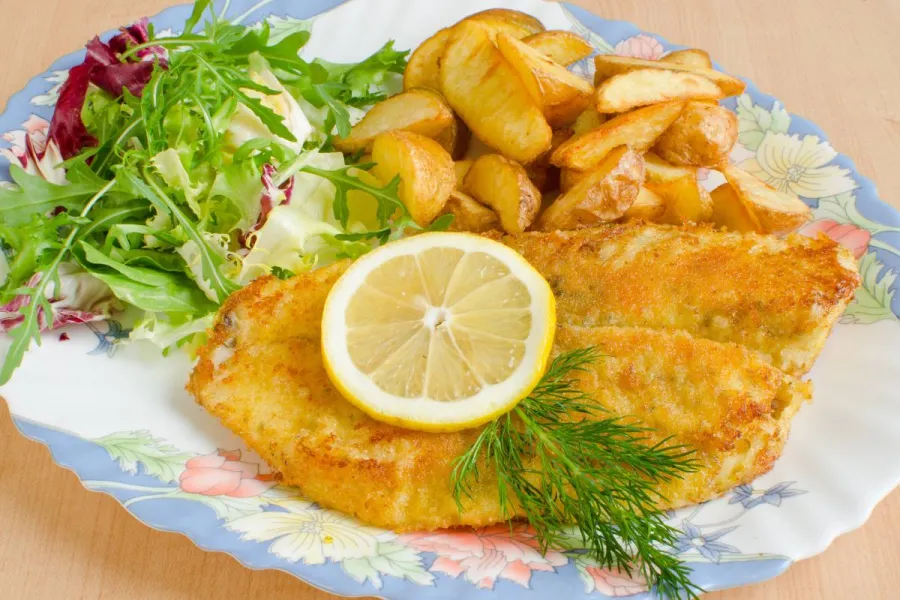
Tilapia has a mild flavor and white, flaky flesh that stays tender when you don’t overcook it. It’s a great “blank canvas” fish for sauces, spice rubs, and marinades because it doesn’t fight strong flavors.
Whole tilapia is usually a medium-sized freshwater fish with a flattened, oval body, silvery-gray to greenish tones, and a spiny dorsal fin. In fish markets it’s commonly sold gutted and scaled, sometimes with the head on.
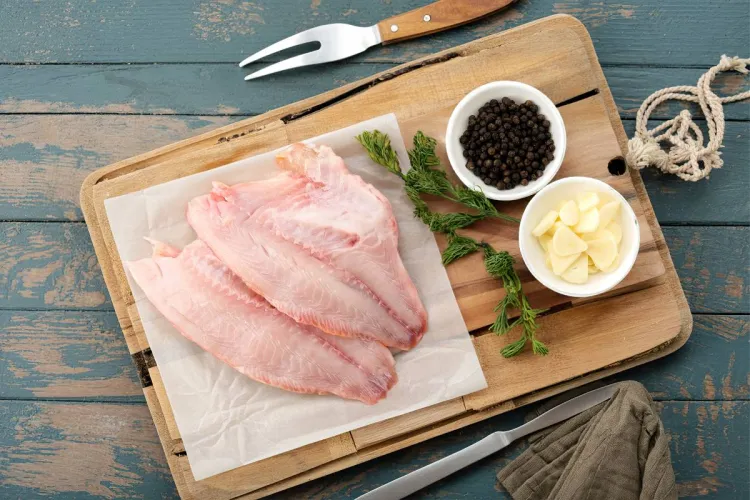
In pieces, tilapia is most often sold as skinless, boneless fillets. The flesh is typically white to very pale pink and the fillets are often thin, which is why tilapia cooks quickly and can dry out if it stays on the heat too long.
Nutritional information
Tilapia is known for being high in protein and low in fat. It also contributes key micronutrients such as vitamin B12, selenium, phosphorus, and potassium, plus some vitamin D.
The plain fish, no breading or sauce, typical values per 100 g, raw: about 96 kcal, 20.1 g protein, and 1.7 g fat (0 g carbs).
Per 100 g, cooked (dry heat): about 128 kcal, 26.2 g protein, and 2.7 g fat (0 g carbs).
Buying and storage
Most tilapia sold today is farmed and commonly found as fresh fillets (often previously frozen) or frozen fillets. You can also find whole tilapia, especially in seafood counters and some international markets, and occasionally smokedproducts depending on the region.
When buying “fresh,” look for a clean, mild smell (not sour or ammonia-like) and flesh that looks moist and firm, without dark, dried edges. For frozen tilapia, choose packages with little to no frost or ice crystals, which can signal poor storage or thaw/refreeze cycles.
For storage, keep fish refrigerated at 40°F / 4°C or colder and use within 1–2 days if it’s fresh or thawed. If you won’t cook it soon, freeze it well-wrapped. The safest thaw is overnight in the fridge; a faster option is sealed fish in cold water, changing the water as it warms.