
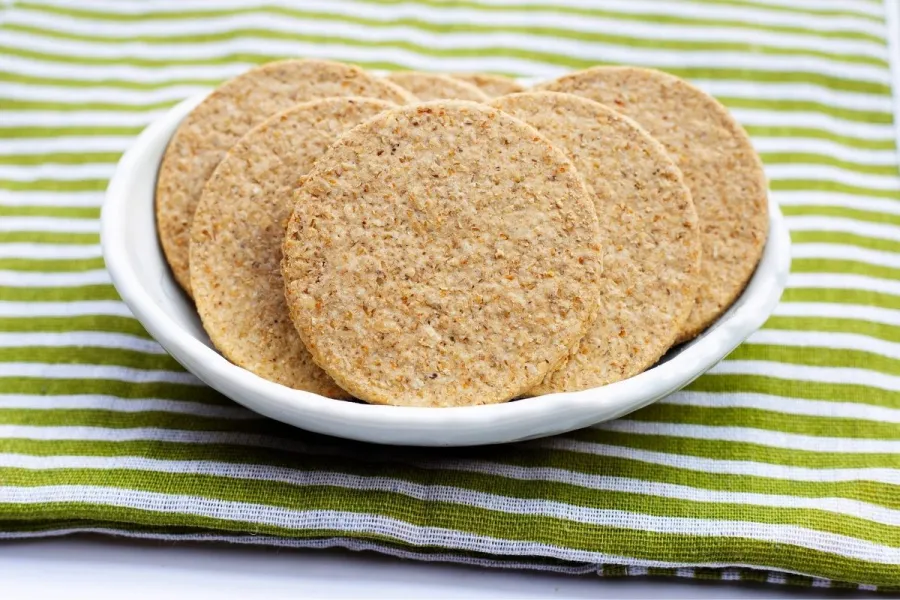
Far from a simple cracker, the Scottish Oatcake is a dense, nutty, and savory biscuit. These oatcakes are the ultimate vehicle for flavor. Their texture is unique, crisp and snappy, yet with a wholesome, earthy crumble that melts in your mouth.
Instructions
Prepare the dry mix
In a large mixing bowl, combine the oatmeal, flour, baking soda, and salt. Stir them together until well mixed. The baking soda is the secret here; it gives the oatcakes a lightness and helps them crisp up beautifully without being rock hard.
Melt and mix
Cut the butter (or fat of your choice) into small cubes and add it to the bowl. Alternatively, melt the fat in the hot water first. Pour the hot water and melted fat into the center of the dry ingredients.
Form the dough
Stir the mixture with a wooden spoon. The oats will begin to absorb the water and bind together. You want a dough that holds together in a firm ball but isn't sticky.
Roll it out
Sprinkle your work surface generously with extra oatmeal or flour. Turn the dough out and knead it gently just a few times to bring it together. Using a rolling pin, roll the dough out to a thickness of about 1/4 inch.
Cut and shape
Using a round cookie cutter (about 3 inches in diameter) or the rim of a glass, cut out circles from the dough. Re-roll the scraps to use up all the dough.
Bake or griddle
Oven Method (Easier): Preheat your oven to 375°F (190°C). Place the oatcakes on a lightly greased baking sheet. Bake for 15-20 minutes until the edges are golden brown and they feel firm to the touch.
Cool and crisp
Transfer the hot oatcakes to a wire rack to cool completely. As they cool, they will harden and develop that signature "snap."
Traditional Griddle Method: Heat a heavy cast-iron skillet or griddle over medium-low heat. Cook the oatcakes for about 5-7 minutes on each side. They should dry out and curl slightly at the edges when done.
Notes
Traditionally served with breakfast, alongside a steaming bowl of soup (like Cullen skink!), or as part of a cheese board, they are incredibly versatile.
You can replicate medium oatmeal perfectly by taking standard Old Fashioned Rolled Oats and pulsing them in a blender or food processor until they look like coarse meal, but not fine flour.
Troubleshooting: If the dough mix is too crumbly and dry, add another tablespoon of hot water. If it is too wet and sticky, sprinkle in a little more oatmeal.
If the edges crack when rolling out the dough, just push them back together with your fingers. This is a rustic bread, so perfection isn't required!
Store your completely cooled oatcakes in an airtight container or tin. They will stay fresh and crisp for up to a week. If they soften, pop them in a warm oven for 5 minutes to crisp them up again.
Variations
Substitute unsalted butter with drippings; bacon fat adds an incredible savory depth.
Substitute all-purpose flour with whole wheat flour for a nuttier taste.
For a savory twist, mix 1/2 cup of finely grated sharp cheddar cheese and a pinch of cayenne pepper into the dry ingredients before adding the water.
While traditionally savory, you can make a "sweet biscuit" version by adding 1 tablespoon of brown sugar and a pinch of cinnamon to the dough. These are lovely with tea.
Source
The magic lies in the perfect partnership between the sweet, delicate onion notes of the leeks and the earthy, creamy texture of the potatoes. Simmered together and blended into a smooth purée, they create a soup that is both nourishing and sophisticated. It is a timeless classic.
Food in Europe