
Moroccan chicken pastilla (bastilla)
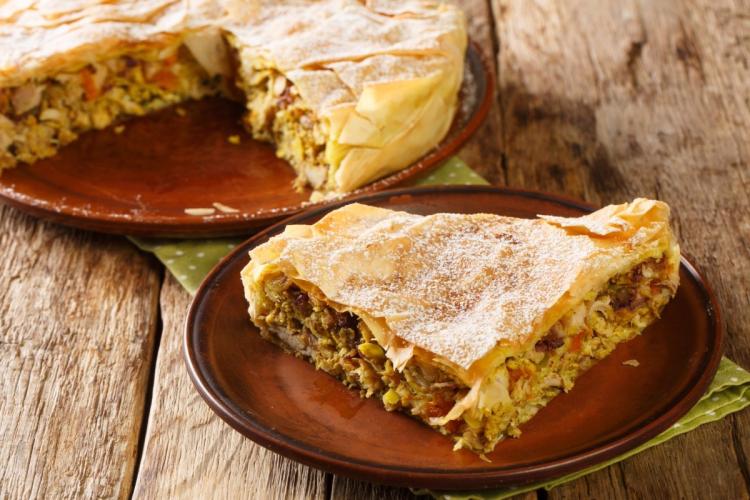
Pastilla — also spelled bastilla, pronounced that way in Morocco since Arabic has no "p" sound — is one of the country's most celebrated dishes: a round pie of paper-thin warqa or phyllo pastry wrapped around a richly spiced chicken and egg filling, topped with almonds, and finished with a dusting of cinnamon and powdered sugar for a striking sweet-and-savory contrast. It was traditionally made with pigeon; chicken is now the everyday substitute almost everywhere outside Morocco's most traditional kitchens.
Ingredients
Instructions
In a large, heavy pot, combine the chicken, onions, butter, olive oil, ginger, cinnamon, turmeric, saffron, salt, pepper, parsley, and cilantro. Add the water, cover, and cook over medium-low heat, stirring occasionally, until the chicken is very tender and falls off the bone, about 1 hour.
Remove the chicken, let it cool slightly, then shred the meat into small pieces, discarding bones and skin.
Return the pot to the heat and simmer the onion sauce until it thickens and most of the liquid evaporates. Stir in the beaten eggs and 2 tablespoons of the sugar, and cook gently until the eggs are softly scrambled into the sauce. Remove from heat and let cool.
Combine the toasted almonds with the remaining 2 tablespoons sugar and a pinch of cinnamon.
Preheat the oven to 375°F. Brush a round baking dish generously with melted butter. Lay a sheet of phyllo across the dish so it overhangs the edges, brush with butter, and repeat with 5 more sheets, rotating each one so the overhanging edges spread evenly around the dish, like flower petals.
Spread the chicken and egg mixture over the pastry base. Scatter the shredded chicken on top, then sprinkle with the almond mixture. Drizzle with the orange blossom water, if using.
Fold the overhanging pastry up and over the filling to enclose it. Layer 2 to 3 more buttered phyllo sheets on top, tucking the edges underneath to seal completely.
Bake for 30 to 40 minutes, until deep golden brown and crisp.
Just before serving, dust generously with powdered sugar, then a crosshatch pattern of ground cinnamon on top. Serve warm.
Notes
Don't rush the first cooking stage — a full hour makes the chicken fall-apart tender and reduces the sauce enough to keep the pastry crisp rather than soggy.
Phyllo dries out fast; keep unused sheets covered with a damp towel while you work.
The cinnamon-and-sugar top is pastilla's signature, even though it looks unexpected on a savory pie — don't skip it.
Variations
Pigeon is the traditional filling where it's available; cook it the same way as the chicken.
Some home cooks add raisins or pine nuts to the filling, though neither is part of the classic recipe.
Seafood pastilla is a different, savory-only style — no sugar, no cinnamon topping — often served at Moroccan weddings.
In Casablanca's Jewish Moroccan tradition, extra browned onion goes into the filling for a deeper, sweeter base.
Source
Pastilla reflects Morocco's layered culinary history — Berber, Arab, Andalusian, and wider Mediterranean influences folded into one dish. It was originally made with pigeon, and that version still exists, but chicken has become the standard substitute nearly everywhere. The combination of warm spices, egg, almonds, and that final dusting of cinnamon and sugar is what gives pastilla its unmistakable sweet-and-savory signature.