
Cashew chicken is one of the great reliable pleasures of the wok: tender pieces of chicken seared fast over high heat, tossed with sweet red pepper and crisp celery, and bound in a glossy, savory glaze that clings to every bite. Roasted cashews go in at the very end so they keep their crunch. It's a takeout favorite the world over, but it's quicker and fresher made at home, on the table in about half an hour, and endlessly adaptable to whatever vegetables you have on hand.
Ingredients
Instructions
Toss the chicken with the soy sauce, cornstarch, and Shaoxing wine. Let it sit for 15 minutes while you prepare everything else — this brief marinade, called velveting, is what gives stir-fried chicken its silky, restaurant-style tenderness.
In a small bowl, whisk together all the sauce ingredients until the cornstarch dissolves. Set aside.
Heat half the oil in a wok over high heat until shimmering. Stir-fry the chicken in two batches until golden and just cooked through, about 3 minutes per batch. Transfer to a plate. Crowding the wok steams the chicken instead of searing it, so give each batch room.
Add the remaining oil to the wok. If using the dried chilies, drop them in for a few seconds until fragrant. Add the red pepper, celery, and the white parts of the scallions, and stir-fry until just tender, 2 to 3 minutes. Add the garlic and ginger and stir-fry for 30 seconds more, until aromatic.
Return the chicken and any resting juices to the wok. Give the sauce a quick stir to recombine, pour it in, and stir-fry until it boils and thickens to a glaze that coats everything, about 1 minute.
Stir through the cashews and the green parts of the scallions. Serve straight away.
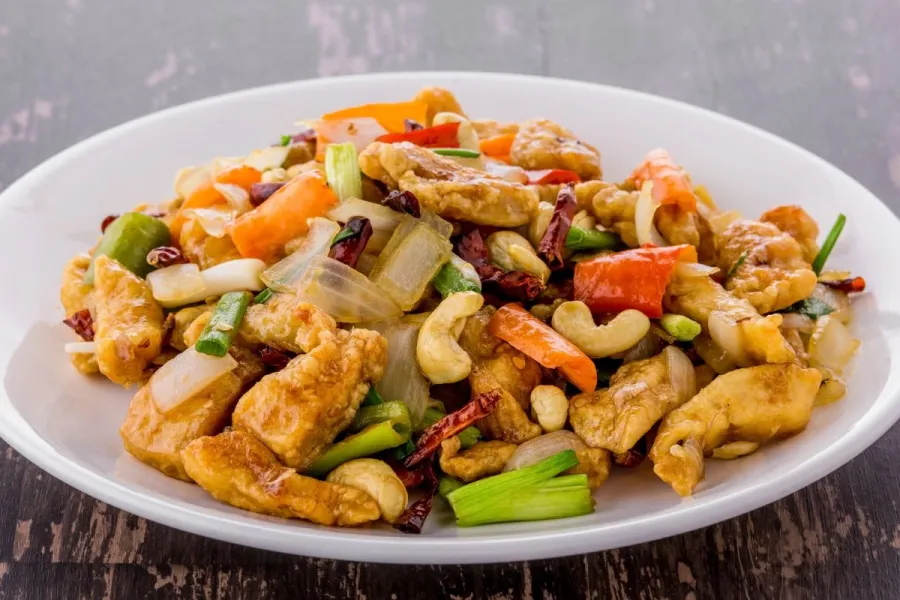
Notes
Chicken thighs stay juicier and more forgiving than breast in a hot wok, but breast works well if you slice it thinly and take care not to overcook it.
Have everything cut, measured, and within arm's reach before you turn on the heat. Stir-frying moves fast, with no time to chop once the wok is hot.
Get the wok as hot as you dare before the chicken goes in — that quick, high sear is what gives a stir-fry its flavor.
Toast the cashews in a dry pan for a minute or two before you start; it deepens their flavor and color. Add them only at the end so they stay crisp.
The dried chilies add fragrance and warmth without much heat once whole; break them open or add fresh chili if you want a real kick.
Best served over steamed rice. To drink, try an off-dry Riesling or a Gewürztraminer flatters the sweet-savory glaze, while a light, fruity red such as Pinot Noir works if you prefer red.
Variations
Go Thai: skip the celery, add a sliced onion and a handful of fresh basil at the end, season with a little fish sauce, and you're close to gai pad med mamuang, Thailand's much-loved cashew chicken.
Add extra crunch: water chestnuts, snow peas, or baby corn all suit the dish.
Swap the protein: thinly sliced pork, lamb pieces, shrimp, or pressed firm tofu all work in place of chicken.
For a sweeter, deeper sauce, replace the oyster sauce with hoisin.
To keep it gluten-free, use tamari and a gluten-free oyster sauce.
Source
Food in Asia
Cashew chicken has a clearer home than many wok dishes. Its roots are Cantonese: in the cooking of southern China, where stir-frying was refined over centuries, tender poultry paired with nuts and a light savory sauce is a long-standing combination. Cashews themselves are not native to China, they arrived from the Americas by way of Portuguese traders centuries ago, but they took readily to the wok, their richness and crunch a natural match for quick-cooked chicken.