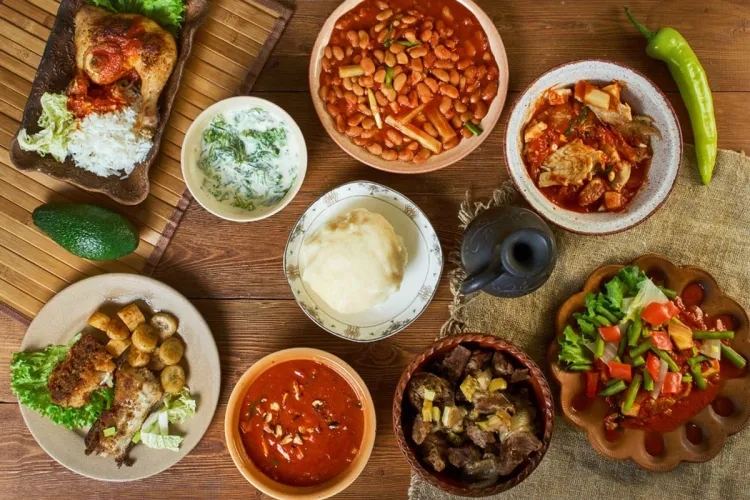
Savor the best of the Republic of Congo food, must-try dishes and flavors.
Food in the Republic of the Congo is shaped by local staples, abundant rivers, and the everyday rhythms of home cooking. Meals typically center on a filling base — cassava, plantains, or rice — served alongside fish, meat, greens, or a rich sauce. The result is a cuisine that is practical, varied, and deeply tied to land, markets, and family life.
This cuisine is often confused with that of the neighboring Democratic Republic of the Congo. The two countries share some ingredients and broader Central African food traditions, but each has its own distinct culinary identity. Any useful reference to Congolese food should start by recognizing that difference.
What defines food in the Republic of the Congo?
Congolese cuisine is built on staple crops, local availability, and practical cooking. Most meals follow a familiar structure: a starch paired with a sauce, stew, protein, or cooked greens. This combination is both filling and adaptable, shaped by what can be grown, fished, traded, or prepared nearby.
Geography plays a defining role. The country's rivers make fish central to daily eating, while tropical conditions support cassava and plantains as reliable crops. Flavor comes less from heavy spicing than from simmering, grilling, and slow cooking — producing a cuisine that is savory, grounded, and ingredient-led.
Food is also social. Meals are prepared for households rather than individuals, and cooking is closely tied to hospitality, routine, and family life. To understand Congolese food is to understand those patterns: staple-based meals, local ingredients, simple methods, and a strong connection between food and community.
Staple Ingredients
A relatively small group of ingredients forms the foundation of the cuisine. Most meals are built around one or more of the following:
- Cassava — the most important staple, eaten in several forms and used as the base for sauces, stews, fish, and greens
- Plantains — boiled, fried, or roasted; versatile and widely eaten throughout the country
- Rice — especially common in urban settings, served with sauces, beans, fish, or meat
- Peanuts — used as a cooking ingredient to add richness and body to sauces and stews
- Fish — the primary protein in many meals, thanks to the country's river systems; commonly grilled, fried, dried, or simmered
- Meat — chicken and goat appear in stews and family meals, usually in a supporting rather than central role
- Leafy greens — cooked down and seasoned as side dishes or sauce-like accompaniments; a regular part of daily eating
- Palm-based products, onions, and peppers — seasonings and flavor builders that give sauces and stews their depth
These ingredients don't work in isolation. They combine to create meals that are balanced, filling, and closely tied to the country's environment and culinary traditions.
Traditional dishes to know
Congolese cuisine is better understood through recurring meal types than through a short list of named specialties. The same reliable ingredients appear in flexible combinations across the country.
Cassava-based preparations are the backbone of many meals.
Fufu — a smooth, dough-like paste made from cassava flour — is one of the most important, eaten by rolling small balls and dipping them into sauce or stew.
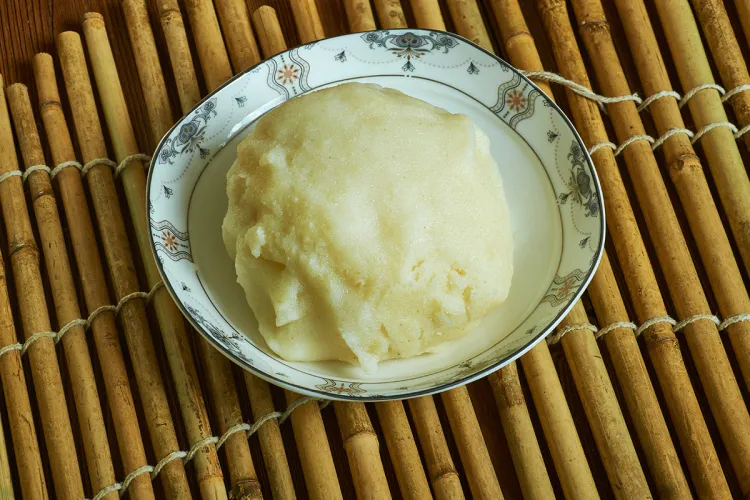
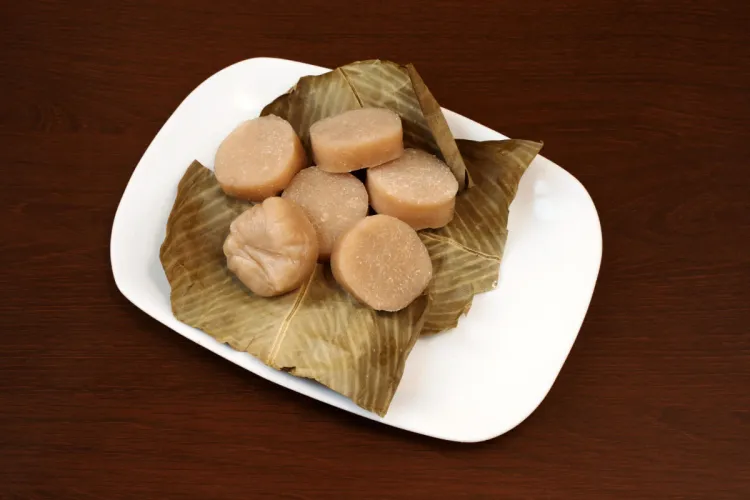
Chikwangue (also called kwanga) is another cassava preparation: fermented, wrapped in banana leaves, and steamed into a dense, slightly tangy block. It is found across both Congos, though it is especially common in the DRC. Both preparations serve the same essential function — anchoring the meal and giving sauces, fish, and greens something substantial to build on.
Plantain dishes are equally familiar. Boiled plantains appear alongside fish and stew; fried plantains (known as makemba) add texture and mild sweetness that contrast well with savory foods. Their adaptability makes them one of the most recognizable elements in Congolese cooking.
Fish dishes reflect the country's river geography. Fish may be grilled, fried, smoked, or simmered in sauce, and is commonly served with cassava, rice, or plantains.
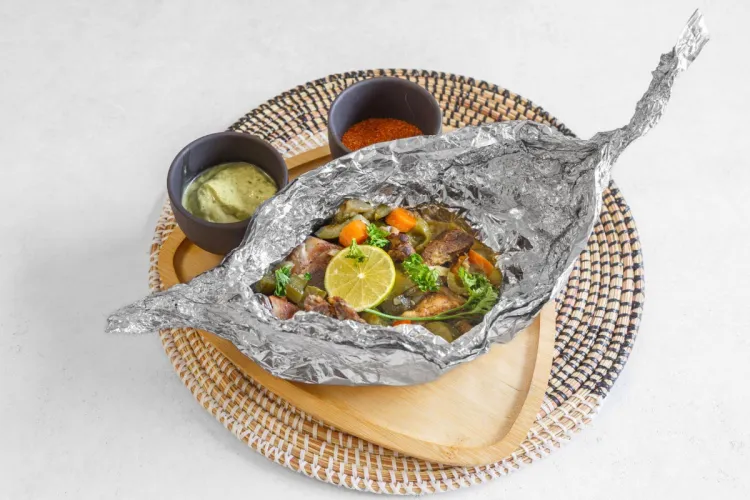
Liboke preparations — fish, chicken, or vegetables cooked in banana leaves — are another well-known category, producing dishes with a fragrant, moist character distinct from grilled or fried alternatives.
Peanut-based sauces and stews demonstrate how Congolese cooking builds richness from accessible ingredients. Ground peanuts thicken sauces and add body, creating hearty, deeply savory dishes that pair naturally with starches and support both vegetables and proteins.
Leafy green dishes are modest in appearance but central to the daily meal. The best-known is saka saka (also called pondu) — cassava leaves boiled, pounded into a paste, and cooked with palm oil, onions, garlic, and often smoked fish or peanut butter. It has a rich, earthy depth and is one of the most widely eaten dishes in the country, served with fufu, rice, or plantains.
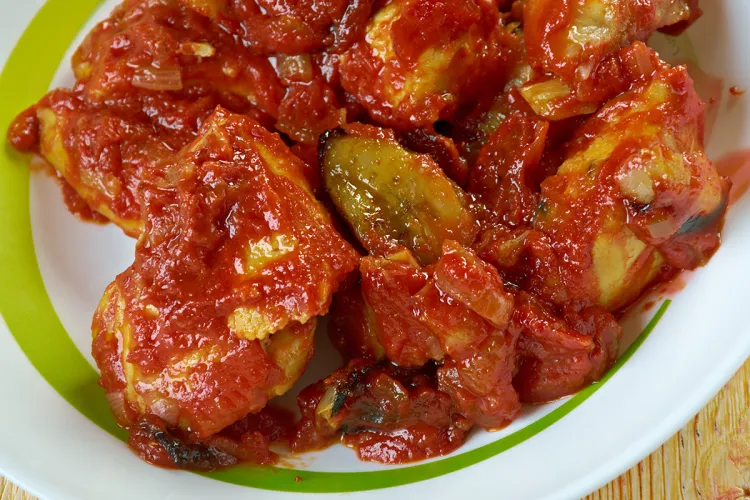
Meat stews — often chicken or goat — tend to appear at more substantial meals, family gatherings, or celebrations. Among the best known is moambe chicken (also called mwambe or mwamba chicken, the original name being poulet à la moambé), a slow-cooked stew in a thick, creamy sauce made from palm nut extract, garlic, tomato, and chili. Rich and deeply savory, it is shared across the region — including Gabon and Angola — and is one of the most recognized dishes associated with Congolese cooking internationally.
Popular snacks and street food
Street food in the Republic of the Congo is built around convenience, affordability, and familiar ingredients. It extends the same staples found in home cooking into portable, quick forms suited to markets, roadsides, and daily movement.
Common street food options include:
- Fried or roasted plantains — naturally suited to on-the-go eating, either alone or alongside savory items
- Grilled meat and fish — valued for strong flavor, portability, and immediate appeal
- Fried dough-based snacks — easy to prepare in batches, inexpensive, and filling
- Fresh fruit — a lighter, refreshing option widely available in market areas
What defines snacks and street food here is usefulness and familiarity rather than complexity. These foods are part of the ordinary rhythm of urban and market life.
Drinks and beverages
Beverages in the Republic of the Congo tend to complement meals rather than command attention. Everyday drinks reflect refreshment, accessibility, and local routine.
- Tea and coffee are common morning drinks, taken simply as part of breakfast or daily habit.
- Soft drinks and bottled beverages are widely available in towns and cities, often appearing at gatherings and informal meals.
- Fresh fruit juices are valued for their refreshing quality and connection to local agriculture — a lighter alternative to sweeter commercial drinks.
- Locally made or traditional beverages vary by community and occasion, and are best understood as part of the broader diversity of Congolese food culture rather than a single national drink.
Beverage habits can differ noticeably between urban and rural settings, and from one household to another.
Cooking methods and flavor profile
The cooking methods of Congolese cuisine are practical and well suited to staple ingredients. The most common techniques are:
- Boiling — used for cassava and plantains to create the soft, filling base of a meal
- Grilling — especially for fish and meat; produces direct, savory flavor with minimal fuss
- Frying — adds richness and texture to plantains, fish, and snacks
- Stewing and simmering — the most important technique for building flavor; slow cooking allows sauces and stews to develop depth and bring ingredients together
- Cooking in banana leaves (liboke) — ingredients are marinated, wrapped tightly in banana leaves, then grilled or steamed; the leaf seals in moisture and adds a subtle fragrance quite distinct from open-heat methods
The resulting flavor profile is savory, earthy, and balanced rather than intensely spiced. Flavor comes from the ingredients themselves — fish, peanuts, greens, palm-based products, onions — and from the slow cooking that brings them together. The cuisine is full-bodied and satisfying without relying on heavy heat. Its character lies in depth, not sharpness.
Food and culture
In the Republic of the Congo, food is inseparable from social life. Shared meals, household routines, and hospitality all shape how food is prepared and eaten. Offering food to guests is a practical expression of welcome and generosity — the value lies not in abundance, but in the act of sharing what is available.
Meals are designed for groups. Staple foods like cassava, plantains, and rice are well suited to communal eating and are prepared in quantities that feed several people at once. Sauces, greens, fish, and stews add variety and substance.
Markets play an equally important role, connecting households to local ingredients and reinforcing everyday food habits. They are spaces where food culture is actively lived rather than passively inherited.
On special occasions — family gatherings, celebrations, or when guests arrive — meals may become more elaborate, featuring richer stews or meat dishes. But even everyday meals exist within a wider cultural framework in which cooking and eating define belonging and community. Food in the Republic of the Congo is, above all, a shared practice.
Republic of the Congo vs. Democratic Republic of the Congo
The Republic of the Congo and the Democratic Republic of the Congo share a border, related historical experiences, and some Central African food traditions. Both cuisines use cassava and plantains as key staples and follow a similar meal structure. Because of this, they are sometimes treated as interchangeable — but that oversimplifies both.
The Republic of the Congo has its own culinary identity shaped by its specific geography, local food systems, and household traditions. The context in which dishes are prepared, named, and combined can differ meaningfully from what appears across the border.
The distinction also matters practically: many readers search for "Congolese food" without realizing the term can refer to either country. A clear reference article should identify the Republic of the Congo by name and place its cuisine within its own national setting, rather than folding it into a vague regional category.
Recognizing this difference doesn't mean ignoring shared roots. Overlap exists, and that's worth acknowledging. The point is not to deny it, but to avoid confusion — and to give the Republic of the Congo's cuisine the specific, grounded treatment it deserves.
A cuisine in context
Food in the Republic of the Congo is defined by staple ingredients, practical cooking methods, and a strong connection to everyday life. Cassava, plantains, rice, fish, peanuts, and leafy greens form the base of most meals, paired with sauces, stews, or proteins in combinations that are balanced and adaptable.
The cuisine is expressed less through a single iconic dish than through recurring patterns: cassava-based accompaniments, plantain preparations, fish dishes, peanut sauces, cooked greens, and slow-simmered stews. Geography, culture, and community all shape these patterns — rivers support the role of fish, tropical agriculture provides staple crops, and markets keep local ingredients at the center of daily cooking.
Understanding Congolese food also means recognizing it as distinct from the cuisine of the Democratic Republic of the Congo. The two share some traditions, but each has its own identity. The Republic of the Congo's food culture is practical, grounded, and culturally meaningful — a clear example of how everyday cooking expresses both place and community.
FAQ
What is the most common food in the Republic of the Congo? Cassava is the most important staple and appears in several forms across many meals. Plantains and rice are also widely eaten as the starchy base of everyday cooking.
Is Congolese food spicy? Generally no. The flavor profile is savory and earthy rather than intensely hot. Peanuts, fish, greens, and palm-based ingredients do most of the flavor work. Some dishes include peppers or seasoning, but strong spiciness is not a defining feature.
What does a typical meal look like? A starch — cassava, plantains, or rice — served with a sauce, stew, fish, meat, or cooked greens. Meals are practical, filling, and built around widely available staple ingredients.
What meats and fish are commonly eaten? Fish is especially important, grilled, fried, dried, or cooked in sauce. Chicken and goat are the most common meats, typically in stews or meals prepared for family occasions.
What role do peanuts play? Peanuts are a key cooking ingredient, used to add richness, texture, and depth to sauces and stews. They help turn simple starches into more complete, satisfying meals.
Is there a national dish? The cuisine is better understood through staple ingredients and recurring meal patterns than through one symbolic dish. Cassava preparations, plantain dishes, fish, peanut sauces, and greens together represent the character of Congolese cooking more accurately than any single dish.
How is this cuisine different from that of the DRC? The two countries share some ingredients and regional traditions, but should not be treated as the same. The Republic of the Congo has its own culinary identity shaped by its geography, local habits, and food environment.