
Madagascar diet offers a diverse and unique cuisine.
Madagascar food, a unique blend of Arabic, Chinese, French, African, and Indian influences, reflects the country’s rich cultural diversity shaped by centuries of migration and trading. Madagascar's location in the Indian Ocean has made it a crossroads for culinary influences from the Middle East and East Africa, further enriching its cuisine. This fusion of flavors and culinary traditions makes Malagasy cuisine stand out, with rice as a staple food that is often served with a variety of meats, vegetables, beans, and other accompaniments. Of course, there are regional variations - each zone has very different vegetables, fruits, and fish available, and ingredients on hand command local recipes.
Unhappily, the most fascinating food in Madagascar can only be discovered at local homes. When on location, try to earn an invitation to a Malagasy home to sample a traditional meal by socializing with friendly local cooks, if your stay will be long enough to do the social. Console yourself if that is not possible, the country’s restaurants serve excellent French cuisine—sometimes with more colorful ingredients from the Western world point of view, such as their zebra steak and fries—and many restaurants across Madagascar serve traditional French dishes and French pastries, reflecting the country's colonial heritage. There is a good assortment of informal restaurants and market stalls where to experience some of the local food magic. As part of the Malagasy dining experience, you will also find a variety of alcoholic drinks, black tea, and local rum available. Else, try some of the recipes from Madagascar at World Food and Wine.
Staple and specialty food in Malagasy cuisine
As everyone else in the world, Malagasy people have their favorite flavors. Rice, as a staple food, holds a central place in the diet of the Malagasy people. Both white rice and red rice are widely consumed in Madagascar, often served with a variety of typical dishes. It is always present at every meal, underscoring its importance as a dietary staple. In addition to meats, vegetables, and beans, vegetarian dishes are also common and accessible in Madagascan cuisine.
A tasty dish that exemplifies local flavors and culinary practices is one prepared with meat of zebu or fatty pork, flavored with coconut milk or crushed peanuts, typically enjoyed at lunchtime and often served with tomato achard. Many traditional meat dishes and vegetarian dishes are typically served with rice. White beans and green beans are also featured in local stews and soups, which are typical dishes in Madagascan cuisine.
Starches: rice, rice flour, noodles and root vegetables
As it happens in most of the African territory, meals in Madagascar consist of less meat, more whole grain cereals and beans, and lots, lots, lots more fresh fruits and vegetables than Western meals.
This vegetable stock is ro. It may resemble bowl of hot water with the odd cabbage leaf swimming around. However, this broth is less risky to drink than local untreated water and has the added bonus of adding some extra vitamins and minerals, as any broth worth its salt should do.
Rice makes the staple of the Malagasy diet; fish, beef or chicken are just the frills on the side. A bowl of rice on its own is considered a perfectly suitable meal. In the countryside, the bowl of rice arrives together with a bowl of a very clear broth made from leafy vegetables. The traditional method of cooking rice in Madagascar involves a process where a thin layer of burnt rice is heated with water, especially when preparing Ranon’ampango, a popular local drink.
Rice is breakfast food everywhere in Madagascar. In fact, rice for breakfast, lunch, and dinner is a wholly normal food day. Malagasy people eat rice three times a day, highlighting its cultural importance and the variety in its preparation, such as either a rice soup for breakfast or dinner, or dried rice for lunch. Eating rice is rooted so deep in the land some people will claim they were not able to sleep the day they did not have a meal of rice. Condensed milk is a popular topping for rice-based breakfasts, and banana fritters—often enjoyed as street food—are another common morning treat. Rice may come with a stew made from beef, fish, chicken, or duck, or vegetables with a few spices for flavor and plain vegetables, boiled in water, will make a side dish. Traditional dishes like Ravitoto are made with crushed cassava leaves, and bambara pea is another local ingredient often cooked with meats and rice.
Noodles are the natural option other than rice. Noodles will come steaming in a bowl either fried, with vegetables or meat, or in the shape of a Chinese broth, with vegetables, fish or meat. Ramen noodles are especially popular in fusion dishes, while bread fritters and banana fritters are common street snacks enjoyed by locals and visitors alike. In a more rustic setting, root vegetables, such as manioc, and corn will complement the diet. Banana leaves and banana leaf are used to steam cakes like Koba Ravina, which are sweetened with brown sugar and sometimes filled with various fruits.
Side dishes are an important part of the meal. Tomato salsa (Lasary Voatabia), made with chopped parsley, is a fresh accompaniment, and salted fish and dried fish are often included in traditional side dishes.
Baguette sandwiches are a popular way to enjoy Malagasy salads and stews, and fermented zebu milk is used in some regional dairy products.
Zebu meat and other meat
Zebu cattle are the main source for the meat consumed, with zebu meat playing a pivotal role in traditional Malagasy cuisine. Romazava, a traditional dish that is often consumed hot, is central to Malagasy cuisine and reflects the country's rich culinary heritage. Dishes such as beans with zebu meat and the celebrated braised zebu meat (hen’omby ritra) showcase the importance and traditional methods of preparing and consuming zebu meat in Madagascar. Zebu au poivre vert, a French-inspired specialty featuring zebu meat with green peppercorn sauce, is also popular and highlights the fusion of local and French flavors. A zebu beef stew or zebu steak, when cooked well, is as delicious as traditional beef. The lower quality beef is usually cut into small cubes, boiled in salted water with onion and garlic until really tender – so tender that it can be shredded with a fork - then cut into thin strips, and roasted until brown.
Chicken or goat is also standard fare and you will find chicken curry readily available. Pork meat is available but eating pork is taboo in many parts of Madagascar. If traveling to Madagascar, be careful where you ask for pork. Roasted duck breast and foie gras are examples of traditional French dishes that are also enjoyed in Madagascar due to French culinary influence.
Spices and vanilla
Madagascar is world-famous for its aromatic spices and exquisite vanilla, both of which are essential to the vibrant flavors found in Malagasy cuisine. As the leading producer of high-quality vanilla beans, the island’s influence stretches far beyond desserts—vanilla is a beloved ingredient in both sweet and savory dishes, lending a subtle, floral note that sets Malagasy food apart. Alongside vanilla, spices like curry powder, green pepper, and chili pepper are widely used, infusing each typical dish with warmth and complexity that will delight your taste buds.
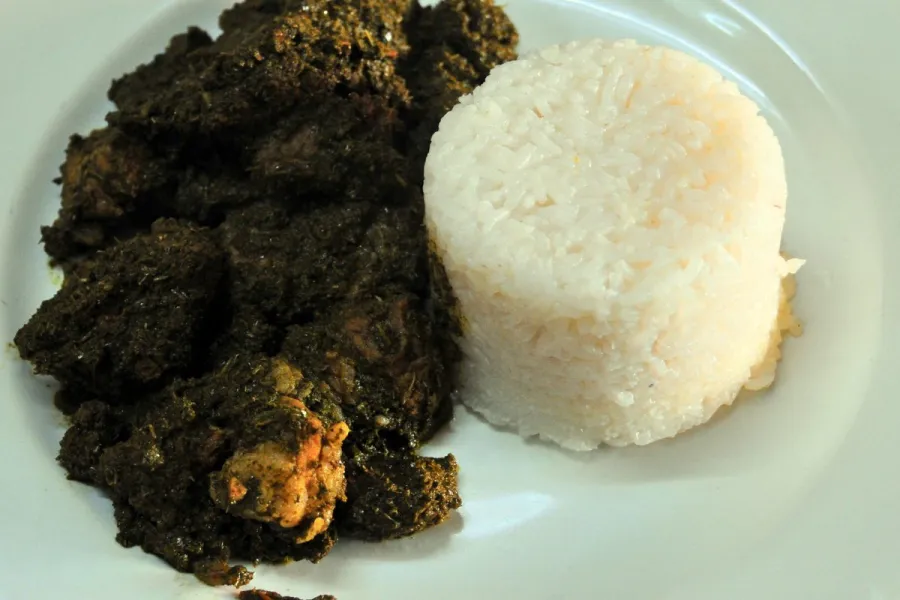
Recipes from Madagascar
To best appreciate the simple but flavorful Malagasy cuisine, it is best to try some recipes from Madagascar, such as ginger stewed beef or romavaza.
Madagascar food
Achards – a curry made from pickled vegetables, hot and spicy.
Hen’akoho – chicken or duck, usually stewed.
Hen’andrano – fish.
Hen’omby – beef.
Kitoza – beef strips, grilled and smoked untilcharcoaled and dried.
Koba – a sweet made from peanut, rice and sugar.
Lasary – Malagasy version of coleslaw, shredded cabbage dressed with mayonnaise, but it can also be prepared with vinegar or curry.
Masikita – grilled beef kebabs.
Mi sao – fried noodles with vegetables or meat.
Mofo menakely – doughnut.
Rano vola – rice water.
Ro – light broth made with leafy vegetables.
Sambo – samosa, a pastry filled with ground meat.
Soupe Chinoise – clear broth with noodles, vegetables, meat or fish.
Steak frites – steak and fries.
The culinary traditions of Madagascar are a true melting pot, shaped by centuries of trade and migration. As a former French colony with strong Southeast Asian and Indian influences, Malagasy cuisine features a remarkable blend of flavors and techniques. You’ll find coconut milk and rice flour in many recipes, from the famous dish Ravitoto—mashed cassava leaves often simmered with zebu meat or fatty pork—to the beloved Mofo, a traditional Malagasy bread or cake enjoyed at gatherings. Crushed peanuts, pickled mango, and exotic fruits add layers of texture and taste, making every meal a new adventure.
Street food in Madagascar is a feast for the senses. The aroma of sizzling meats, the vibrant colors of tropical fruits, and the lively chatter of Malagasy people create an unforgettable atmosphere. Dishes like Romazava, a hearty beef stew seasoned with local greens and spices, and Akoho, roasted chicken with chili pepper and onion, showcase the island’s love for bold, satisfying flavors. Even simple salads like Lasary, made with pickled mango or other vegetables, offer a refreshing contrast to the rich, savory main courses.
Visiting Madagascar means more than just sampling delicious food—it’s about experiencing the culture and hospitality that come with every meal. Whether you’re savoring a tasty dish of zebu meat at a bustling market stall or sharing a plate of rice and coconut milk-infused Mofo with new friends, you’ll discover that food is at the heart of Malagasy life. The island’s unique blend of spices and vanilla, combined with its rich culinary heritage, ensures that every bite is a celebration of tradition and innovation.
So, for those planning to visit Madagascar, be sure to explore its markets, try the street food, and immerse yourself in the flavors that make Malagasy cuisine so special. From the subtle sweetness of vanilla to the fiery kick of chili pepper, Madagascar’s food scene promises to leave you with memories—and tastes—that will last a lifetime.