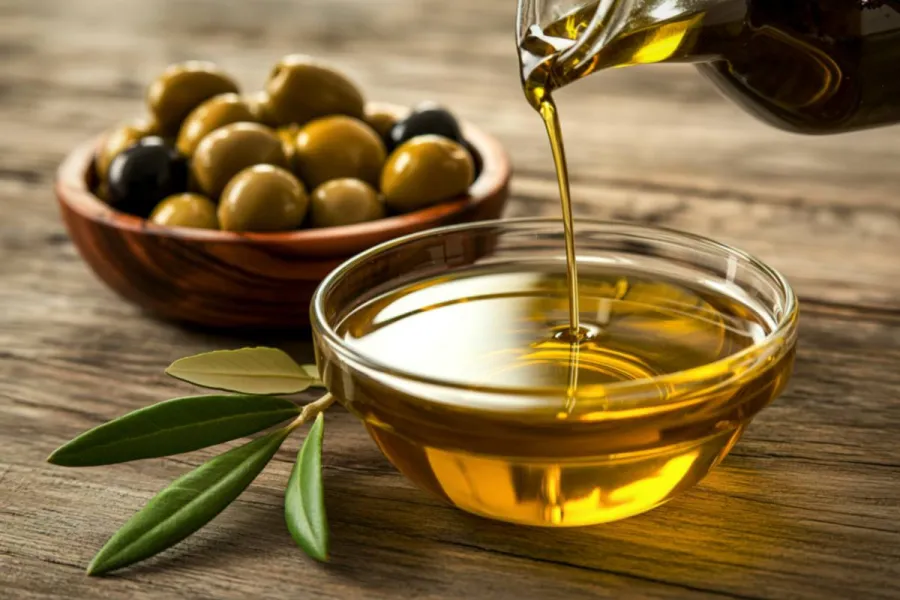
Olives, with their characteristic, slightly acidic flavor, are used as appetizers, in salads, pasta sauces, pizzas, in robust meat and chicken dishes, with vegetables such as eggplant, tomatoes. Olive oil is used in cooking, salad dressings and sauces.
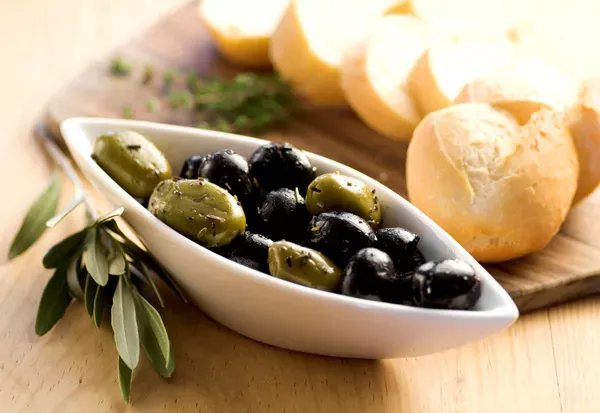
Olives make wonderful appetizer, especially those stuffed or flavored with herbs and garlic. Green olives are good for salads while ripe dark purple and black olives are better for cooking. Taste in olives differs from one region to the other, from sweet and fruity, to acid and bitter. You may need some persistence to find olives suited to your personal taste. If you are buying on the loose, in an open market, sample the olives before you buy them.
Facts
Olives have been known to man since prehistoric times. Olive trees were already cultivated in ancient Egypt. Olive branches and leaves were found in Tutankhamen's tomb.
The dove brought back an olive leaf to Noah when sent on exploration from the Ark, and this is just one of many passages where olives and olive oil are mentioned in the Bible.
Greek Olympic victors received amphorae of olive oil as prizes, and athletes anointed their bodies with it before competition.
Olives and olive oil are a classic product. Cato, a Roman, wrote a manual on farming about 175 BC where the cultivation of olives and making of oil receive the most devoted attention.
The word oil in English derives from Latin oleum, which comes from the Greek elaion — olive. So every cooking oil is linguistically named after the olive.
It takes roughly 10–11 pounds of olives to produce just one liter of extra virgin olive oil.
Some Mediterranean olive trees are still producing fruit at over 2,000 years old. There's a tree in Crete estimated to be between 3,000 and 4,000 years old.
Many canned "black olives" — the mild, rubbery American supermarket kind — are actually unripe green olives that have been artificially oxidized with oxygen and iron salts to turn them black. They're not naturally ripened at all, which is why they taste so different from Mediterranean cured black olives.
Olive oil quality fraud is a well-documented industry problem. Studies have found that a significant portion of oils labeled "extra virgin" in supermarkets don't meet the standard when independently tested.
How to identify olives and olive oil
Olives are the small, oval shaped fruits from the olive tree, an evergreen native to the Mediterranean area. Olives have a single hard stone inside containing the seed. Olives have been cultivated for centuries in Spain, Italy, Greece and France, now grown elsewhere in the Mediterranean and Mediterranean type climate countries in the Americas.
The tree often has a gnarled trunk and branches. The leaves are oval shaped with a silvery green color. The olive tree flowers in spring and bears fruit from late summer to winter.
Types of olives
Green olives – Unripe fruits, picked in summer; found whole or stoned and stuffed, often pickled with aromatic herbs, spices and other condiments.
Dark olives - Half-ripe fruits, picked in autumn, found pickled or packed in salt.
Black olives – Ripe fruits, whole or dried, picked in winter, found also pickled or packed in salt.
Types of olive oil
Olive oil is extracted by pressing the ripe olives. Depending how the fruit is pressed - once or more, cold or heated and refined - the oil varies in quality, color and flavor.
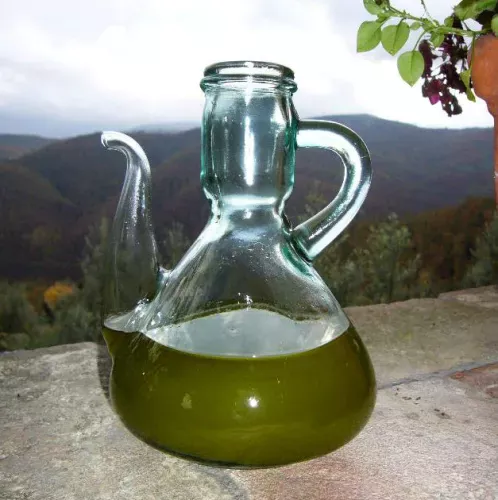
Color is not a reliable indicator for flavor - darker color does not necessarily translate into a stronger flavor and better quality. A green color may be produced by olives harvested earlier, when they were green and not fully ripe.
Understanding the labels
Extra virgin olive oil - Oil obtained from the first cold pressing. Color goes form a pale yellow to light green, depending on the region and olives used. It has a delicate flavor, with no more than 1% acidity. This is the best quality and more expensive olive oil.
Virgin olive oil - Also cold pressed but higher level of acidity, acidity range goes from 1% to 3% acidity.
Fino olive oil - A blend of extra virgin and virgin olive oil
Olive oil - This oil is a combination of refined, virgin and extra virgin olive oil. Refined oil loses flavor and aroma and needs to be mixed with some virgin and extra virgin oil to regain it.
Light olive oil - It does not refer to the number of calories, which are the same, nor the number of mono-unsaturated acids, but to the fact the oil is finely filtered to produce an oil with a light aroma and color, and a higher smoke point than regular olive oil.
Pomace oil - Oil extracted from pressing not the fruit but the paste left after the first pressing, including the seed. Heat and chemical solvents used to extract the oil in a refinery.
How to use and store
Olives, black when fully matured and green when unripe, are only edible if cured or pickled in brine. Raw olives are intensely bitter. They may be flavored with herbs and spiced, and also come stoned and stuffed with a variety of fillings. Found usually canned or in jars, or loose, in the grocery stores. Unopened cans and jars keep for 1-2 years. Once opened, transfer to an airtight container, keep in the fridge, and use olives within the week. Keep loose olives in the fridge, in an airtight container, and use within 2-3 days from the purchase.
Olive oil is usually found in bottles or cans. Light is said to affect its quality, so dark colored bottles or cans are supposed to keep its characteristics for longer. Most olive oils in the market are a blends from oil obtained from different olive varieties and different regions. Oil becomes rancid if stored for too long, so try to get yours from a grocery store with fast stock rotation, especially if buying oil in clear bottles. Store olive oil in a cool, dark place for up to 6 months.
Extra virgin olive oil is best for salads and salad dressings or to flavor finished dishes. Use virgin or fino olive oil for marinades or sautéing, regular olive oil for frying and baking - but its smoke point is too low to be good for deep frying. Light olive oil, the filtered variety with less flavor, is good for frying and baking, as it does not impart the characteristic flavor regular olive oil has. Extra virgin olive oil loses its qualities when heated to the high temperatures in sautéing and frying, so using it for general cooking is usually not worth the extra expense.
Cooking with olives and olive oil
Olives are ever present in Mediterranean cuisine. Add to all sorts of salads, slice them and sprinkle over pizza as topping, turn them into seasoned pastes such as tapenade, add olives to sauces as in putanesca sauce or this feta and olives dressing, and add them to meat and fish casseroles.
Mix cooked pasta with light cream and anchovy stuffed olives, sliced, and sprinkle dried oregano to taste for a quick and delicious dish.
Use olive oil in general cooking for the unique flavor it imparts.
- Drizzle over steamed or boiled vegetables for a simple dressing. Try a salad, especially tomato salad, with no more dressing than salt and olive oil, or turn it into a more complex dressing such as vinaigrette, mayonnaise, aioli, pesto Genovese or almond, parsley and sage pesto.
- Add olive oil to bread dough, as in this Italian focaccia bread. To use olive oil in baking, follow your normal recipe and substitute 1 oz of hard fat - butter, margarine or lard - with 1 Tbs olive oil.
- Add your own touch to olives and alter these marinated olives recipe with your own seasonings.
- Use olive oil mixed with fresh chopped herbs to baste grilled or barbecued fish.
- Mash potatoes and other root vegetables with olive oil instead of butter for a healthier option. You are substituting saturated fats with healthier, un-saturated ones, it does not affect the calories.
- Roast a chicken with olive oil and your favorite herbs, and condiments. Mix salt, olive oil, finely chopped parsley, and crushed garlic to a paste and rub it on the skin of a 2-4 lb roasting chicken. Roast as usual.
- Substitute melted butter with olive oil to brush phyllo pastry.
Substitutions
If your recipe requires olives and you don't have them, substitute olives in sauces with 1/4 amount of capers, it will add a similar salty, pickled flavor. For a cocktail garnish, substitute with same amount of caper berries or cocktail onions.
15 large or 36 small pitted olives make 1 cup chopped
In cooking, substitute olive oil with sunflower, peanut, safflower, or soybean oil, all of which have a similar smoke point.