
Mahalabiya (Egyptian Milk Pudding)
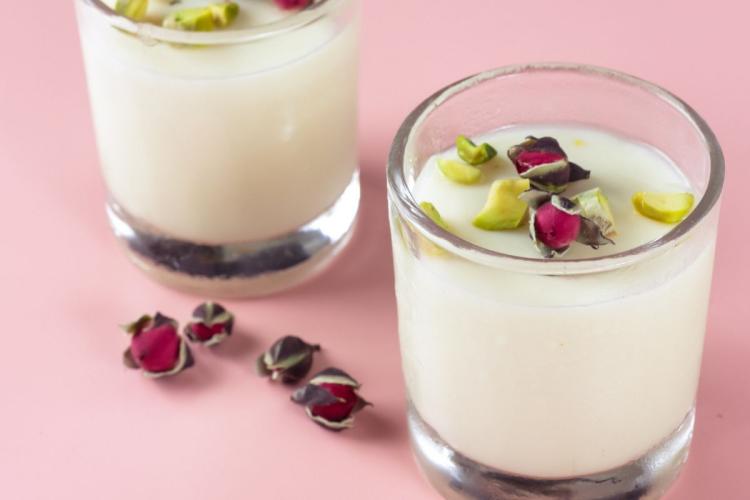
A silky, chilled milk pudding scented with orange blossom water and topped with chopped pistachios. It is lightly sweet, creamy and refreshing, and is served in individual glasses.
Ingredients
Instructions
Dissolve the cornstarch in the cold water, stirring until there are no lumps.
Warm the milk and sugar in a medium saucepan over medium heat, stirring until the sugar dissolves and the milk is steaming but not yet boiling. Whisk in the cornstarch mixture.
Cook, stirring constantly, for 8 to 10 minutes, until the pudding thickens enough to coat the back of a spoon and begins to bubble gently. Remove from the heat and stir in the orange blossom water.
Pour the pudding into 6 glasses or small bowls. Let it cool at room temperature, then refrigerate for at least 3 hours. Top with the pistachios just before serving.
Notes
Stir the whole time the pudding is on the heat, and keep the heat moderate. Cornstarch thickens quickly and will catch on the bottom of the pan if left alone.
Cooking it a couple of minutes past the first bubbles gets rid of any raw starch taste. The pudding firms up as it chills, so it should look slightly loose when it comes off the heat.
Press a piece of plastic wrap directly on the surface while it cools if you prefer not to have a skin.
Variations
Orange layer, as in the cookbook: heat 1 cup fresh orange juice with 3 tablespoons sugar and 1½ tablespoons cornstarch dissolved in 2 tablespoons water, stirring for 5 minutes until thick. Pour it into the bottom of the glasses and chill for 30 minutes, then sprinkle with chopped almonds and pour the warm milk pudding on top.
Use rose water instead of orange blossom water, or a pinch of ground mastic.
Top with a drizzle of honey, shredded coconut or chopped hazelnuts instead of pistachios.
Serve with the rice pudding or with fresh fruit for a lighter dessert.
Source
Mahalabiya (also spelled muhallebi or mohalabeya) belongs to a family of milk puddings found across the Middle East, thickened with starch or rice flour. A legend credits a Persian cook with bringing it to Arab cuisine in the late 7th century, and says it was named after the Arab general Al-Muhallab ibn Abi Sufra. The earliest recipes, from the 10th century, already include milk thickened with ground rice.
In Egypt it is a familiar dessert, served cold in individual glasses and topped with pistachios, and is especially popular in summer. In Palestine and Lebanon, cooks often layer a fruit pudding on top, with orange or, in Gaza, sour plum, and the cookbook version with an orange layer follows that tradition.