
Guzeya (Egyptian coconut meringue bars)
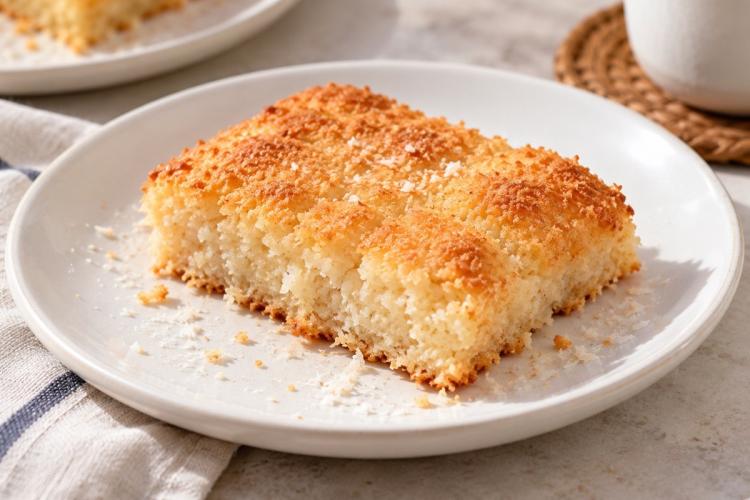
A simple Arabic sweet halfway between a macaroon and a meringue, made with only coconut, sugar and egg whites. It bakes up golden and lightly crisp on top, with a soft, chewy coconut center, and is served cold.
Ingredients
Instructions
Preheat the oven to 350°F (180°C). Butter a loaf pan well, or line it with parchment paper.
Beat the egg whites in a clean bowl until they hold stiff peaks. In a separate bowl, mix the coconut, sugar and vanilla. Add the egg whites and fold them in gently from the bottom up, until just combined and no streaks of white remain.
Spoon the mixture into the pan and level the surface with the back of a spoon. Bake for 20 to 25 minutes, until the top is golden.
Let it cool in the pan, then turn it out onto a long serving dish. Cut into slices and serve cold.
Notes
Fold the whites in gently. Stirring hard knocks out the air, and the bars come out denser and wetter. The mixture will look thick and a little crumbly, and the sugar dissolves as it bakes.
Do not skip the cooling: the guzeya firms up as it chills and cuts cleanly only when cold.
Use unsweetened coconut. Sweetened coconut will make it much sweeter.
Variations
Brush the top with a little oil or melted butter before baking, as some Egyptian cooks do, for a glossier crust.
Drop spoonfuls onto a parchment-lined tray and bake for 12 to 15 minutes for macaroon-style cookies.
Top each piece with a glacé cherry, as in the related Egyptian coconut cookie shakalama.
Serve with tea or coffee, or alongside fresh fruit.
Source
Cuisine: Egyptian cuisine.
Guzeya is a coconut sweet usually described as Egyptian, though it is also found in other Arab countries, including Saudi Arabia, Morocco and the United Arab Emirates. It is a humble, quickly made dessert, served at tea time or after a meal, and it sits within a family of coconut and egg-white sweets that includes the Egyptian coconut macaroon shakalama. Its name and origin are not well documented.