
Wine has its place at the Belgian table, but beer is the country's true national drink, one of the great brewing traditions of the world.
Wine production is virtually non-existent in Belgium, but beer is another story entirely. Belgium is beer country, and a top producer of specialist beers found nowhere else. Here you will find styles that surprise the newcomer: beer flavored with peach, cherry, or raspberry, sour beers fermented by wild yeast, and strong golden ales brewed by monks. I had not associated those flavors with beer before my first visit to Brussels — but drinking a peach-flavored beer in the Grand Place, sitting close to a large open fire on a chilly winter evening, made a convert of me very quickly.
Beer is often the best accompaniment to a Belgian meal — especially carbonnades (beef braised in beer) and other beer-based dishes, and, of course, the ubiquitous steak-frites. Traditionally, beer is drunk more at lunchtime than in the evening, while wine appears at both meals.
In 2016, UNESCO recognized Belgian beer culture as part of the world's Intangible Cultural Heritage — an acknowledgment of how deeply brewing is woven into the country's daily life, from the corner café to the monastery.
A living brewing tradition
Belgium's brewing scene is not a museum piece. After a long decline through the 20th century, when the number of breweries fell dramatically, the country has seen a strong revival. Today there are more than 400 breweries in Belgium producing over 1,600 distinct beers, ranging from global giants to tiny family operations and a new wave of craft microbreweries.
What sets Belgium apart is not volume but variety. Few countries pack so many distinct beer styles into so small a territory: lambics and gueuze, Trappist and abbey ales, golden strong ales, witbier (Belgian wheat beer), saisons, Flemish red and brown ales, and the fruit beers that first surprised me in Brussels. Let us leave the well-known industrial lagers to one side and concentrate on the beers still made by traditional methods — the ones that make Belgium worth the trip.
Lambic and gueuze: beer made by wild yeast
True lambic is, more or less, a uniquely Belgian brew. Where most beer is fermented with cultivated yeast added by the brewer, lambic ferments spontaneously, driven by wild yeasts naturally present in the air of the Brussels region. The wort is left exposed in shallow open vessels so these wild yeasts can settle and begin their work. The result is a beer unlike any other — dry, sharp, and faintly sour.
Lambic is the base liquid, obtained from wheat and barley after spontaneous fermentation using only wild yeasts. Because the process relies on nature rather than a controlled yeast strain, it is very difficult to guarantee a standard result, and a young lambic can be bracingly sour.
Gueuze is what happens when a brewer blends lambics of different ages — typically young and old — and bottles them together. A second fermentation takes place in the bottle, producing a sparkling, complex, Champagne-like beer. The method has an obvious parallel with the méthode champenoise, and gueuze is sometimes called the Champagne of Brussels.
From a lambic base, brewers create the fruit beers Belgium is loved for. Adding sour cherries produces kriek; raspberries give framboise; and adding caramel and candy sugar yields the gently sweet faro.
Trappist beers: brewed by monks
The pinnacle of Belgian brewing is achieved by its Trappist breweries. To carry the official "Authentic Trappist Product" label, a beer must be brewed within the walls of a Trappist monastery, under the supervision of the monks, and as a non-profit endeavor whose income supports the community and its charitable work.
Belgium is home to five officially recognized Trappist breweries: Westvleteren, Chimay, Orval, Rochefort, and Westmalle. (A sixth, Achel, lost its official designation in recent years after the last monks left, though beer is still produced there.) Trappist beers like Orval and Rochefort are typically dark, high in alcohol, still produced in the traditional manner, and exceptionally good — capable of winning over even those who think they do not like beer.
The Tripel and Westmalle
Among the styles the Trappists gave the world is the Tripel — a light golden ale, high in alcohol but remarkably balanced, with a creamy head and a rich aroma. The name is thought to reflect the brewing process, in which a large quantity of pale malt is used. Despite their strength — some reach 9.5% alcohol or more — good Tripels are not harsh; the body stays surprisingly light thanks to the use of Belgian candy sugar in the brew, and the flavor is a heady mixture of malt and hops.
The benchmark Tripel comes from Westmalle, brewed at the Abbey of Our Lady of the Sacred Heart. The monastery was founded as a priory in 1794 by Cistercian monks fleeing the French Revolution, and was elevated to a Trappist abbey in 1836, when brewing began. Westmalle is widely credited with defining the Tripel as we know it, introducing its classic golden version in the 1930s. It remains the standard against which every other Tripel is measured.
Beer in Brussels: Cantillon
For anyone curious about lambic, the Brasserie Cantillon in Brussels is a place of pilgrimage. Founded in 1900, this family brewery still makes its beer using the time-honored spontaneous-fermentation method, and it houses the Brussels Museum of the Gueuze within its working walls — a rare chance to see lambic, gueuze, and kriek made the old way, surrounded by equipment that has barely changed in over a century.
Cantillon offers self-guided visits and guided tours, and holds public brewing days during the colder months, when the open fermentation requires cool air. It is a working brewery rather than a polished visitor center — which is precisely its charm. Opening days and hours vary through the year, so it is worth checking ahead before visiting.
Beyond Brussels: local and regional breweries
Many Belgian towns still keep a local brewery. In Leuven, the Domus is a family-run house brewery and café that has been making its own beer since the mid-1980s, with its brews piped directly across the road from the brewhouse to the bar. It produces a small range of house beers, including seasonal offerings, all of which can be tasted on site.
Leuven is also the home of Stella Artois, the most internationally famous of all Belgian beers. Its roots run deep: the Den Hoorn ("The Horn") brewery is recorded in Leuven's tax registers as far back as 1366, and the Artois name was attached in the early 18th century when Sébastien Artois became master brewer. Stella Artois itself is comparatively modern — it was first brewed in 1926 as a special Christmas beer, named Stella (Latin for "star") for the season, and proved so popular it became a year-round lager. Today it is brewed in a thoroughly modern facility, and the company that grew from it, AB InBev, is the largest brewer in the world. The original Den Hoorn building still stands in Leuven, repurposed but preserving its brewing heritage.
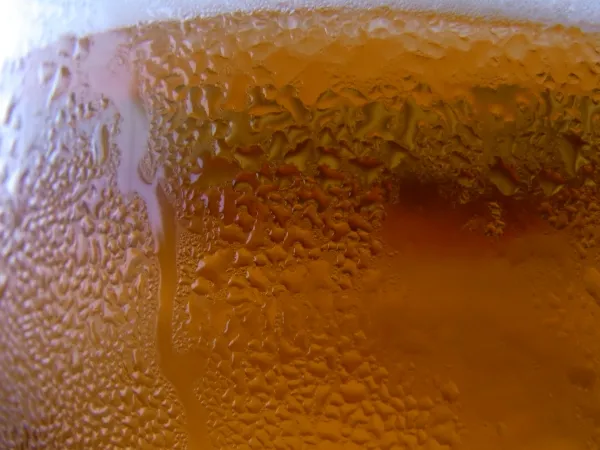
Beer and food: a few pairings
Belgians cook with beer as readily as they drink it, and the country's beers make natural partners at the table. A few combinations worth trying:
- Carbonnade flamande (beef braised in brown ale) with a Flemish brown or dark abbey ale — the same family of beer used in the pot.
- Steak-frites or grilled meats with a Tripel or a golden strong ale, whose carbonation and strength cut through rich food.
- Mussels with a witbier (Belgian wheat beer), the citrus and coriander notes echoing the traditional seasoning.
- Mature cheeses with a Trappist Dubbel or Rochefort, the malty sweetness balancing the salt.
- Kriek or framboise with desserts, or simply on their own as an aperitif — the fruit and acidity make them refreshing before a meal.
- Gueuze with oily fish, charcuterie, or anything rich, where its sharp acidity works like a squeeze of lemon.
Lambic – the liquid obtained from rye and wheat after they undergo a natural fermentation process using only wild yeasts. With this spontaneous fermentation it is very difficult to ensure a standard quality, and it might produce beers that are too bitter.
Gueuze – obtained after mixing lambics from three different years. The lambic is left to age in a controlled environment, following a method based in the Champanoise, discovered by Dom Perignon, including a second fermentation in the bottle.